
Landing page copy: three laws to make it convert
Be understood, be remembered, keep the promise. Three constraints for writing landing page copy, with examples from real client pages and the checklists to run before you publish.
Davide Ruggeri
Traffic can be bought. Attention can’t: it has to be earned, and you only get one shot at it.
Someone who lands on your page from an ad owes you nothing. They give you a few seconds, grudgingly, and in those seconds they decide whether they’re looking at someone who has understood their problem or at yet another person after their money. The verdict comes straight away and there’s no appeal. They close the tab and leave, and you paid for the click.
The mistake sellers make is believing that buyers are like them: that they read everything, know the industry, appreciate nuance. They don’t. Readers come from different places and with different levels of awareness, and they judge the page with what they know at that moment, not with what you’d like them to know.
Hence the three laws for writing landing page copy: be understood, be remembered, keep the promise. They aren’t tips, they’re constraints: you can ignore them, but you pay every time, and you pay in clicks you’ve already bought.
There are only three because a page doesn’t have room to be good at ten things. A page that follows all three doesn’t need tricks. A page that skips one goes looking for all of them, and none of them work. For each law you’ll find what it means, an example from my projects with what happened next, and the four checks to pass before you publish.
First law: be understood
A landing page should be understandable by an eight-year-old. If the product is particularly technical, you can go up to ten. No further.
Readers arrive with different levels of awareness. Some already know the problem and are comparing suppliers; others have only just put their finger on it and don’t yet know what the thing they need is called. The page has to hold up in every case, so the copy is pitched at whoever starts furthest away. If a sentence doesn’t land on the first read, it has lost its power.
The two-second test
Open the landing page, look at it for two seconds and close it. If it isn’t live yet it works just as well on the draft, or even on the headline you have in mind. Then answer:
- What does this company sell?
- Who does it sell it to?
- What should I do now?
If one of the three answers doesn’t come, the page isn’t clear. Have someone who doesn’t work with you and doesn’t know your industry do it too: people who know the industry fill in the gaps the copy leaves open on their own.
Four things that kill clarity
- Industry jargon. The words you’d use in an internal meeting and never at the pub: replace them with the word the customer would use.
- Abstractions like “solutions”, “value”, “efficiency”, “innovation”. Replace them with something you can see.
- Long sentences, over twenty words or with more than one subordinate clause. Split them in two.
- A page that describes your process instead of the result. Write what the person who pays gets.
From abstract to concrete
The fastest way to gain clarity is to replace big words with small, specific ones.
| Before | After |
|---|---|
| Integrated document management solutions | Contracts signed from your phone, in two minutes |
| We optimise your production processes | You know what each part costs before you make it |
| 360-degree consulting for your business | We deal with your accountant and the bank for you |
The second version isn’t more creative. It just leaves less room for interpretation.
The example: an iconography school
An iconography school, summer residential courses, traffic almost entirely from organic search. The page selling the courses was a blog post.
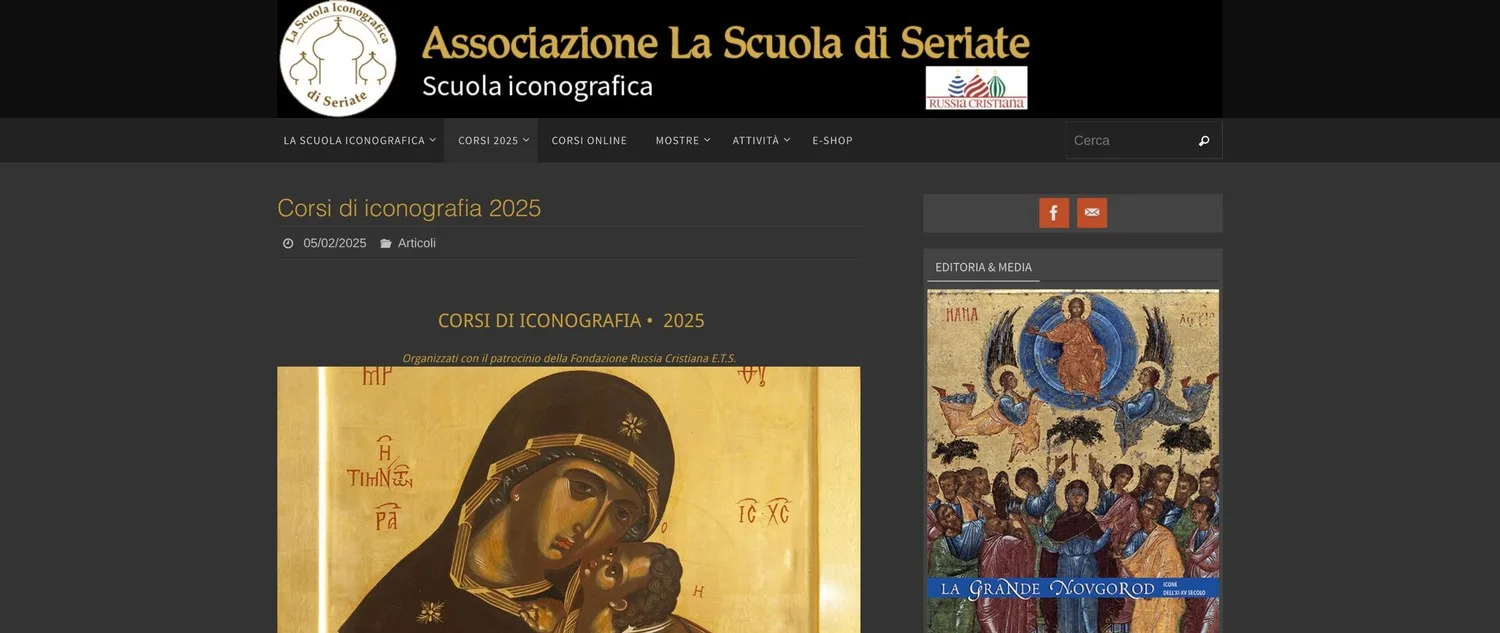
The two-second test doesn’t even get started. There’s a title with the publication date and the Articles category underneath, and a sidebar with catalogues, tags and recent posts. You can’t tell whether you’re reading a news item or choosing a course.
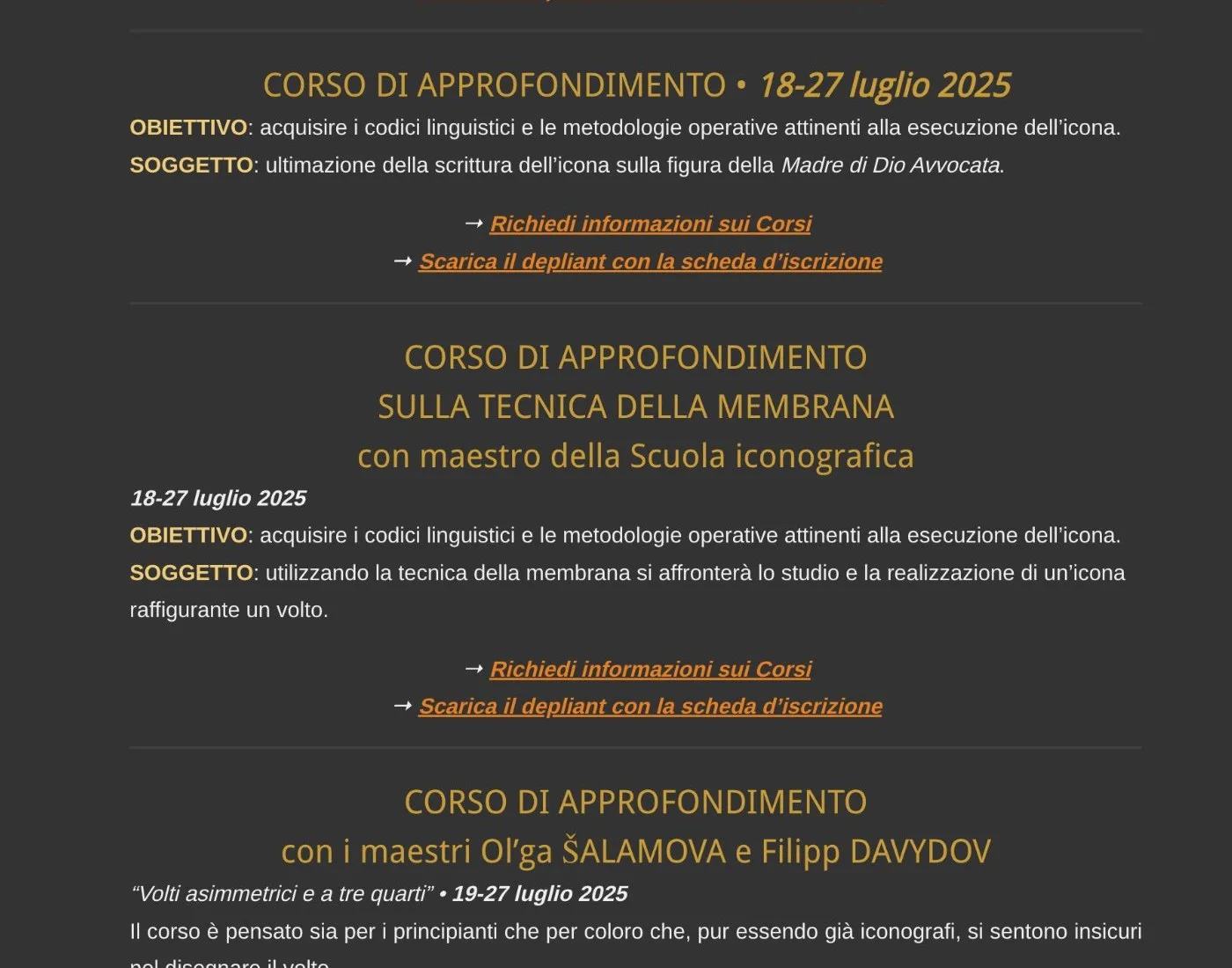
The objectives read like this: to acquire the linguistic codes and operational methodologies pertaining to the execution of the icon. The same line, word for word, on three different courses. They’re objectives written for the people who teach.
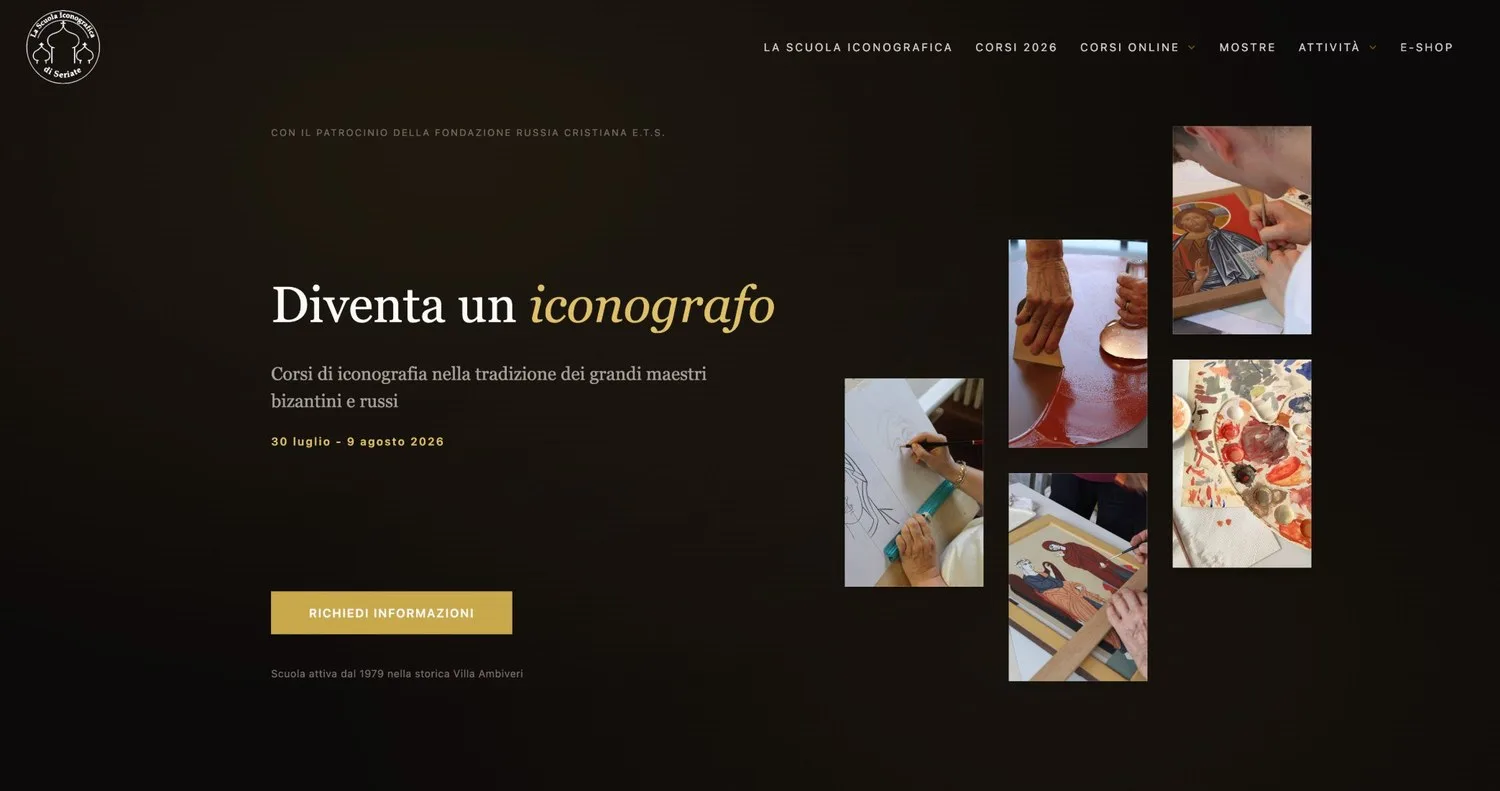
“Become an iconographer” is the result for the person who pays, not the process of the person who sells. Below it are the dates and a single button. Further down, the page lists the starting points in the reader’s own words: you’ve never painted but icons call to you, you’ve done short workshops but you’re missing a proper path.
From April to 15 June, with the same traffic, the conversion rate grew by 36% compared with the same period the year before. The full story is in the Iconography School of Seriate case study.
Before you publish
Four checks. Run them on the page that costs you the most today, not on the whole site.
- Someone outside my industry understands what I sell in two seconds
- No sentence is longer than twenty words
- No word I wouldn’t use talking at the pub
- The page talks about the buyer’s result, not my process
Second law: be remembered
A clear page gets understood. A memorable page gets remembered the next day, when the person actually has to decide.
Harry Dry, who writes Marketing Examples, asks three questions of every sentence he publishes. I use them too, on every line I write.
1. Can I visualise it?
If the reader can’t picture it, they won’t remember it. Concrete words stick, abstract ones evaporate.
- Abstract: “a better way to work”
- Concrete: “the quote ready before the customer gets out of the van”
2. Can I falsify it?
A sentence nobody can dispute is a sentence nobody believes. If you can say the opposite and it sounds just as plausible, the sentence isn’t saying anything.
- Not falsifiable: “quality and professionalism at the customer’s service”
- Falsifiable: “we reply within four hours, Saturdays included”
3. Can only my company say it?
Cover the logo and show the page to someone. If it could belong to one of your competitors, the copy isn’t working for you. Take the headline, put your main competitor’s name on top of it and see whether it still holds. If it does, rewrite it.
Three yeses out of three: the sentence is good, leave it alone. Three noes: rewrite it from scratch, don’t patch it. In between, what’s usually missing is specificity. Apply it to the headline first: if that passes the three questions, the rest of the page gets much easier.
The example: an online Italian course
An online Italian course for foreigners. Here the whole site was rebuilt, so the headline is one of the things that changed, not the only one.
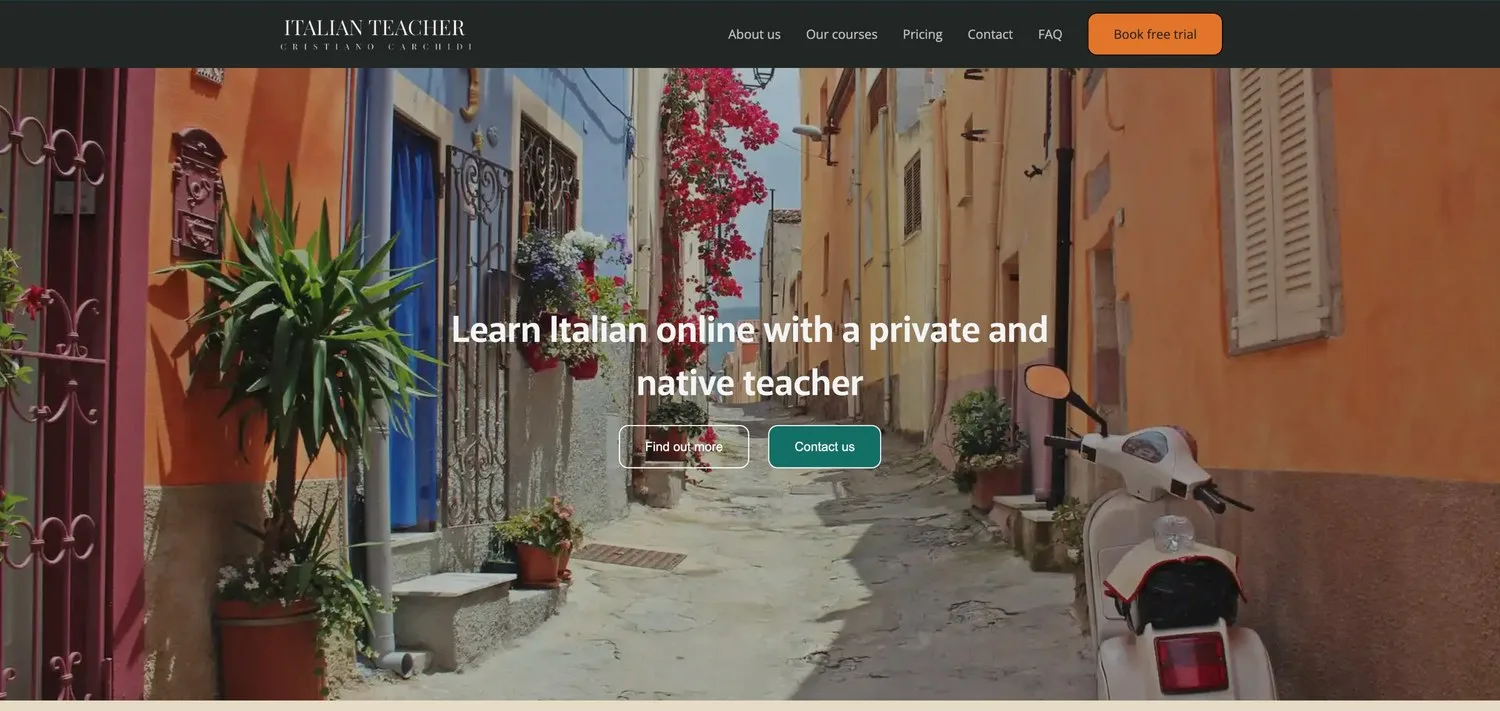
“Learn Italian online with a private and native teacher”. It doesn’t fail one of the three questions, it fails all of them: there’s nothing to see, nobody would say the opposite, and the same line could sit on the site of any online Italian school.
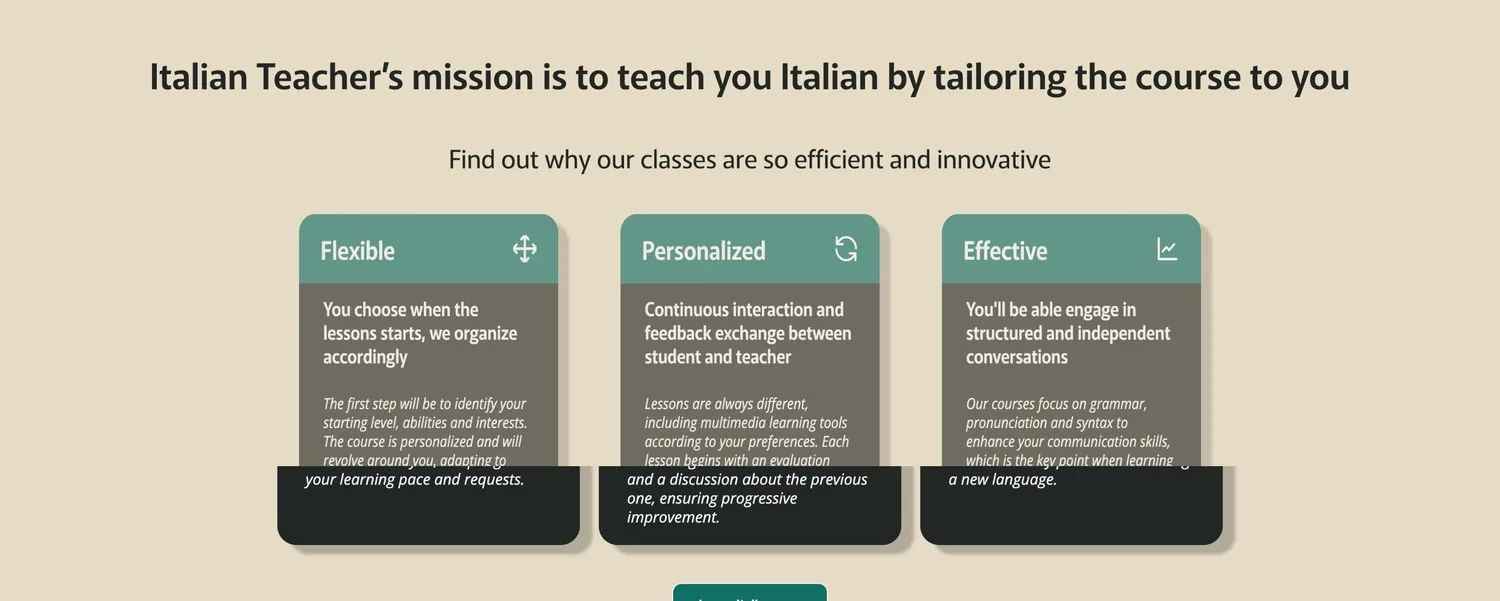
Just below, three adjectives nobody can dispute: flexible, personalised, effective. When a page has to say it’s effective, it’s usually because it hasn’t yet said what it does.
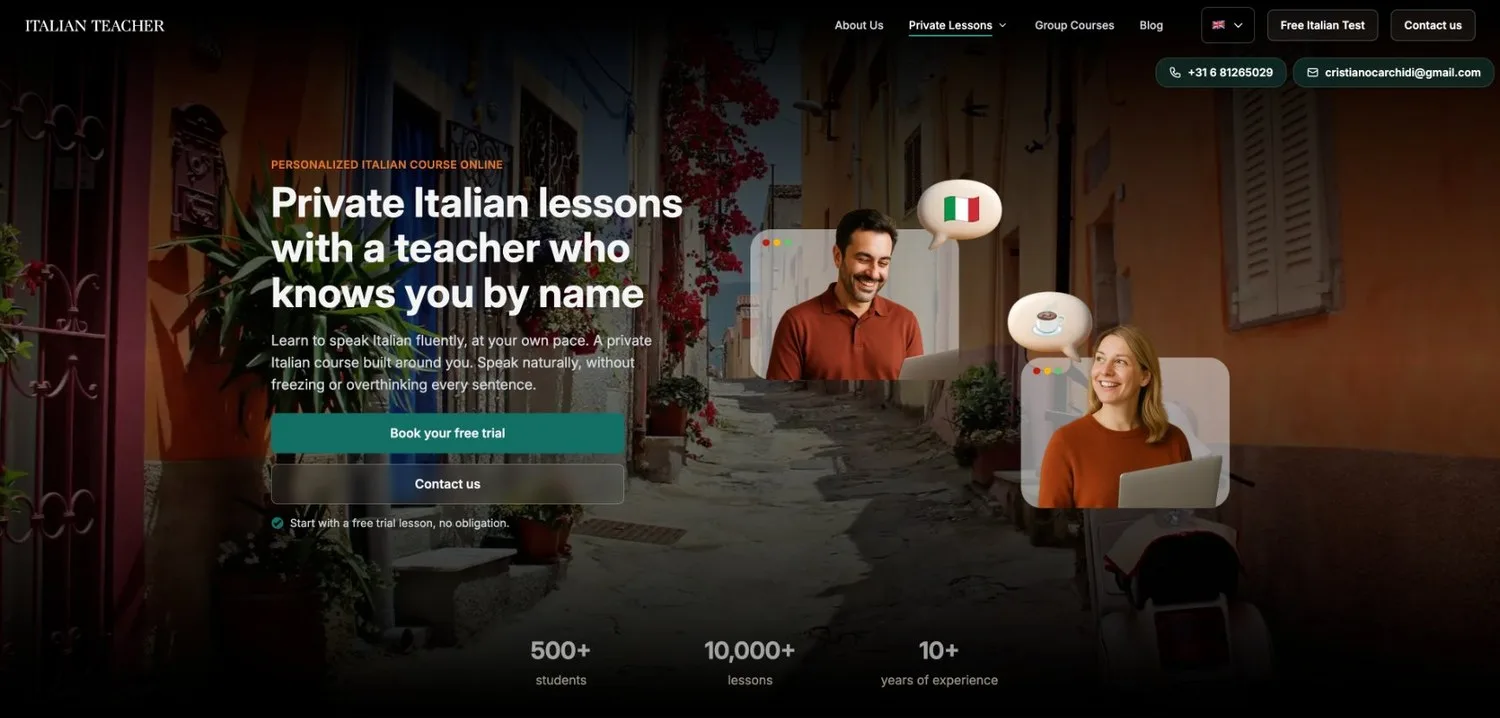
“Private Italian lessons with a teacher who knows you by name”. You can see the scene. The sentence can be disproved, because all it takes is a new teacher every month. And a platform with hundreds of rotating tutors can’t write it, so it belongs to this school.
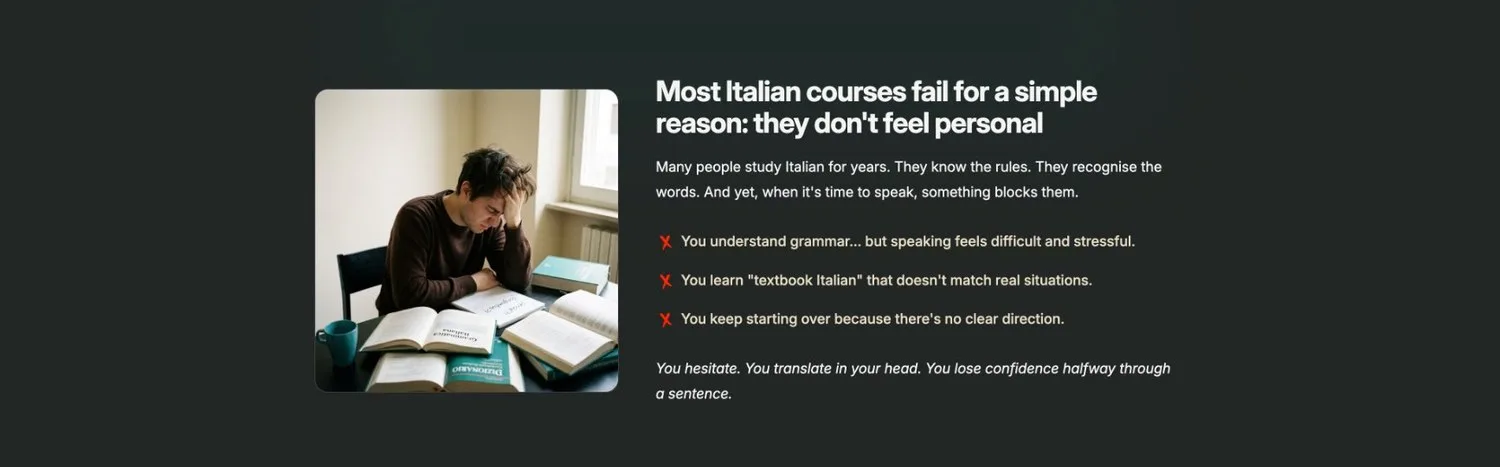
Below, the problem told in the words of the people who live it: you translate in your head, you freeze mid-sentence, you lose confidence while you speak. It’s not the language of the industry, it’s the language of the person reading.
After the rebuild the conversion rate doubled. The full story is in the Italian Teacher case study.
Before you publish
The three questions apply to every line. These four checks apply to the headline.
- The headline can be visualised
- The headline contains something that can be checked or disproved
- With a competitor’s name in place of mine, the headline doesn’t hold
- There’s at least one number, date or specific detail above the fold
Third law: keep the promise
A landing page makes one promise. If it makes three, the reader remembers none of them and leaves.
This is the point I work on most often, because the problem can’t be seen by looking at the page on its own. It only shows when you line up the whole journey: ad creative, ad copy, landing page headline, page body, call to action.
Same promise, same words, same tone across all five steps. If the ad says “quote in 24 hours” and the headline says “your business deserves to grow”, the person has already realised they’re in the wrong place, even if they couldn’t explain why.
Put them on a single row in a spreadsheet: creative, ad copy, headline, subheading, call to action. Read them in sequence as if they were one sentence. If at some point the subject changes, you’ve found where you’re losing money.
The three most common breaks
- The ad promises one thing, the page sells another. Paid click, lost visit.
- The page offers two different actions. Every extra option lowers the chance that any one gets chosen.
- The tone changes halfway. Readers don’t trust two different voices.
The example: an addiction treatment centre
A private addiction treatment centre, three locations, traffic from Google Ads. It isn’t the same ad rewritten: these are two different campaigns, at two different times, and what I’m comparing is the relationship between ad and page.
In this case the first and second laws couldn’t be applied all the way, and it’s one of the few times that has happened to me: calling the problem by its name conflicted with Google Ads’ terms and conditions, and that’s where the traffic came from.
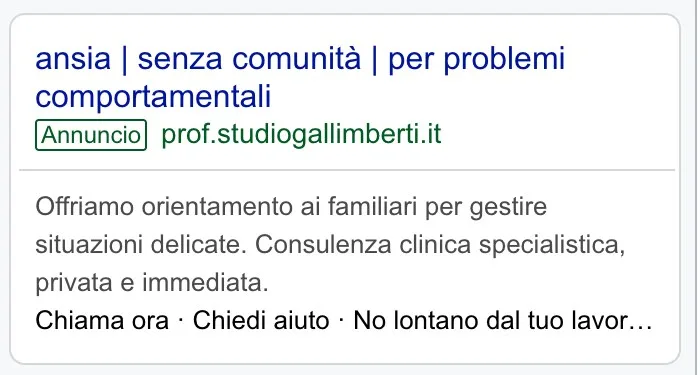
The ad talks about anxiety and behavioural problems, speaks to family members and offers guidance, without a residential stay on top of that. Whoever clicks on it is asking for advice about a situation that doesn’t have a name yet.
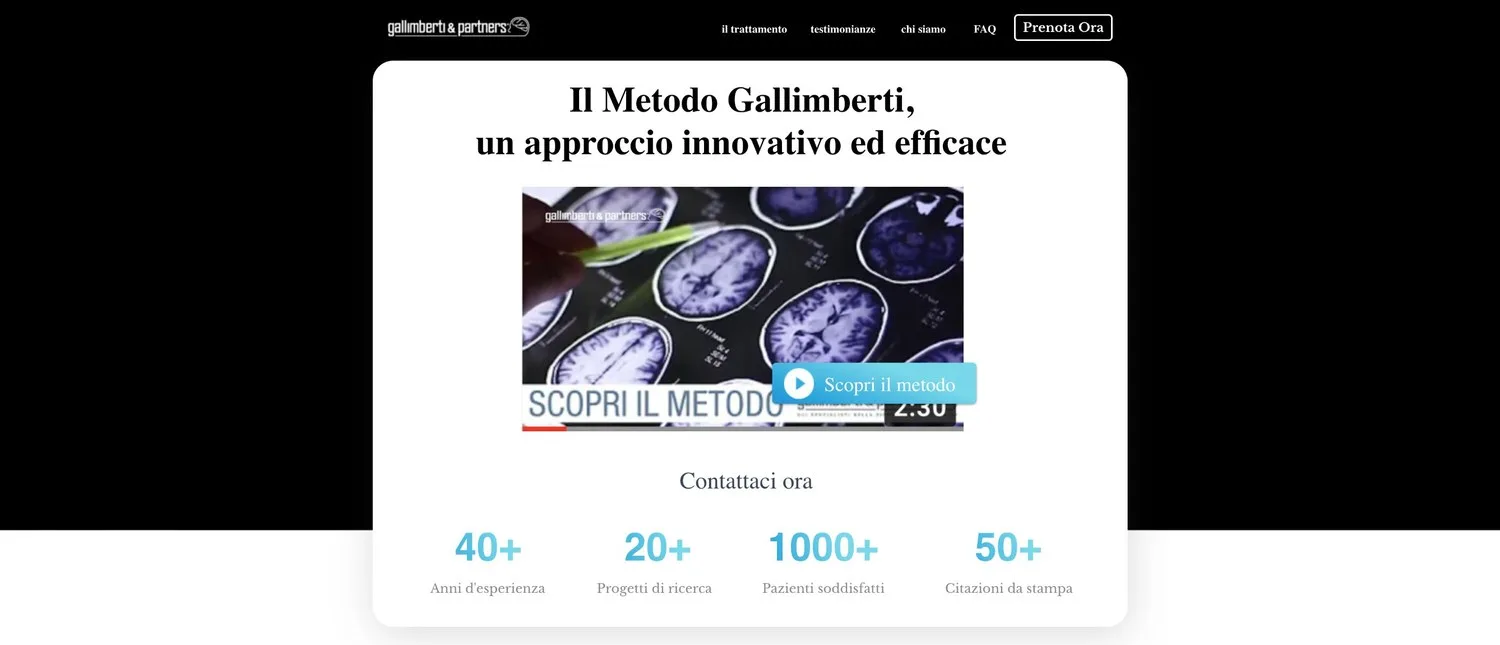
None of the ad’s words reappear. The page talks about itself, its method and its figures. It assumes someone who has already decided to get treatment, while the ad was speaking to someone still trying to understand.
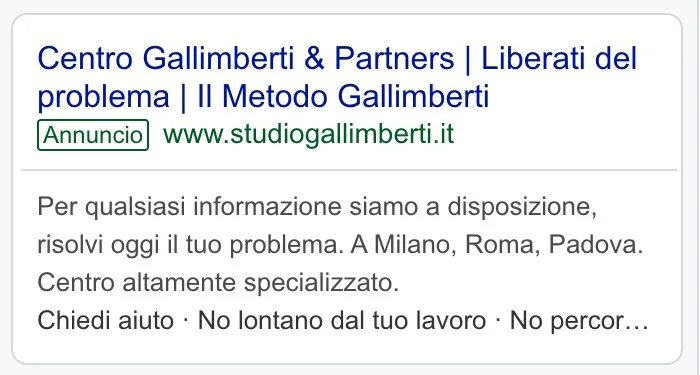
The new ad talks about solving the problem, invites people to ask for help, names the three locations and makes clear you don’t have to disappear from work.
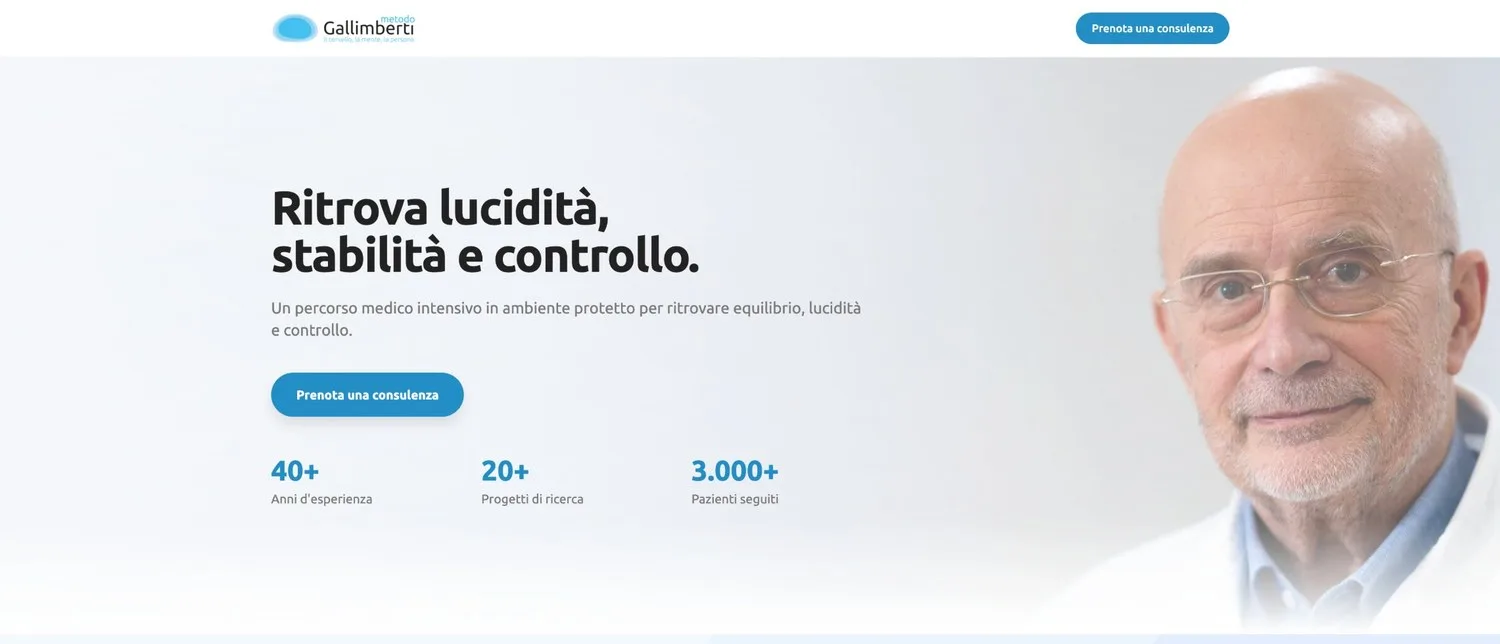
The page explains what “getting free of the problem” means, namely regaining clarity, stability and control, and asks for a consultation. Same subject, same register and above all the same point in the journey: the ad asks for a contact and the page asks for a contact.
Keeping the promise doesn’t just mean talking about the same subject: it means stopping at the same point and asking for the same commitment.
Moving from one setup to the other, the conversion rate quadrupled, but it isn’t a test: there are two campaigns, the targeting changed and seasonality sits in between. Take it as an order of magnitude, not as proof. We also worked on the same site’s SEO, and you’ll find it in the Gallimberti Method case study.
Before you publish
One landing page per campaign, not one landing page for everything. If you have three offers, you need three pages.
- The headline picks up the ad’s words
- The page offers a single action
- The ad and the page share the same tone
- The call to action says what happens after the click
Three laws, one idea
The three laws look like three different topics, but they say the same thing at three different points in the journey: the reader isn’t like you. They don’t know your words, they won’t remember you the next day, they didn’t reread the ad before clicking.
Being understood, being remembered and keeping the promise are three ways of taking that distance seriously instead of hoping it closes on its own. Almost every page I’ve rewritten had been written by someone who was hoping.
Take the page that costs you the most and run it through the three checklists.